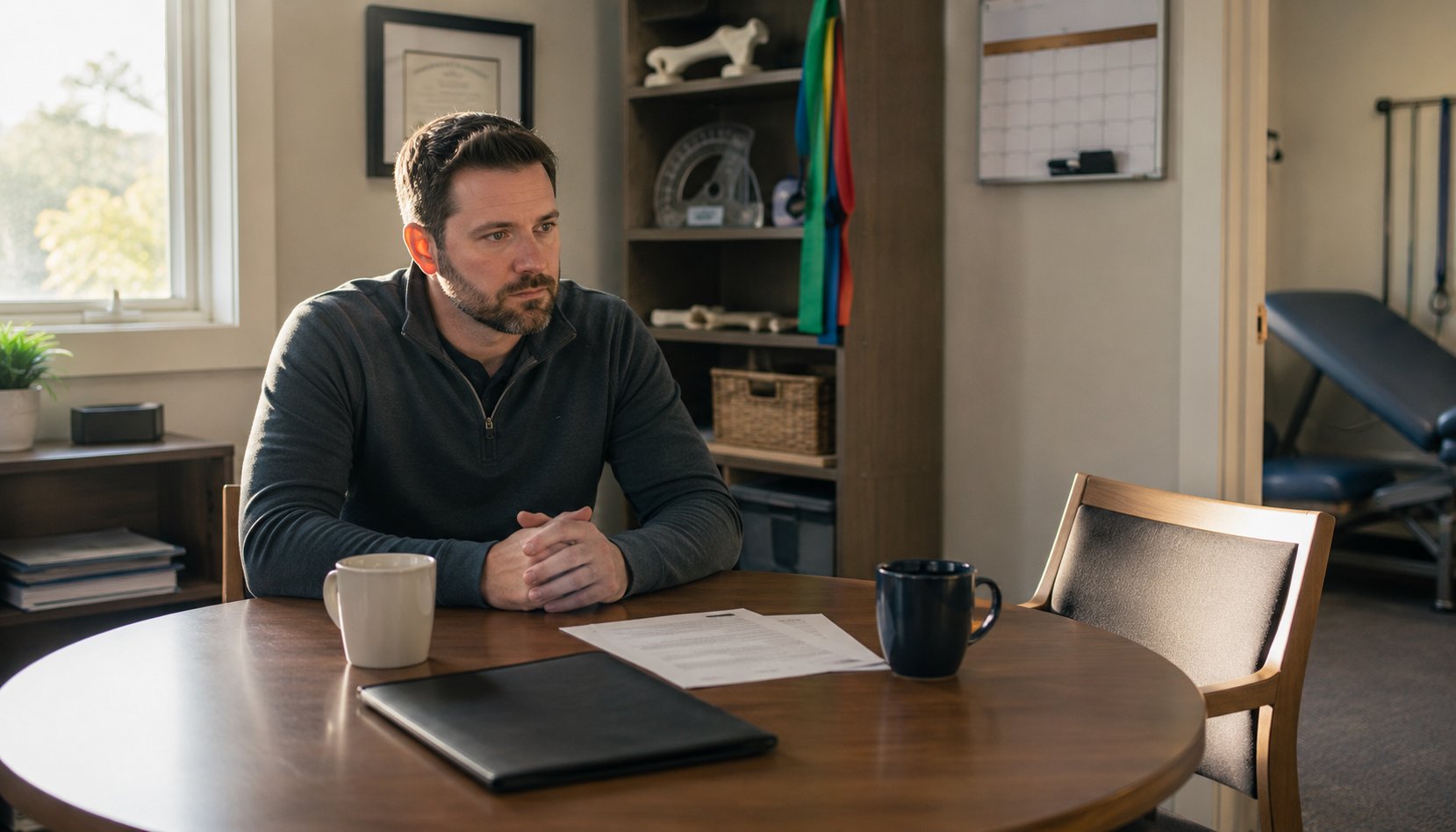
You finally decide to do the generous thing. Your best clinician has been with you for years. They carry a full caseload, patients ask for them by name, and the younger staff watch how they work to learn how it is supposed to be done. So you offer them a path into ownership. A partnership. A buy-in. A stake in the practice you built with your own hands and your own credit. You expect something between gratitude and disbelief.
And they say no.
Not “let me think about it.” No. Sometimes a fast no, sometimes a kind one, but a no. You leave that conversation stung and running the same loop. I offered them the thing I chased for years, the thing I gave up sleep and savings and weekends to get, and the strongest, most capable person in my building turned it down.
I have owned several service businesses and spent the last decade-plus coaching clinic owners, and I have watched this exact conversation go sideways more than once. For a long time I felt about ownership the way most owners do, that it was obviously the goal, the way out of being someone else’s employee. I believed it because for me it was sometimes true. It was also sometimes the opposite. I have owned a business that paid me well and ran without me, and I have owned one that was a harder job than the job I left, with worse benefits and no way out. The clinician who told you no may be seeing the difference between those two more clearly than you are.
The no is not ingratitude, and it is usually not a lack of ambition. It is arithmetic. Your clinician looked at the deal you put in front of them and priced it, and the price did not clear. That is worth understanding, not because it will change their mind, but because the no is telling you something true about the practice you just asked them to buy into.
When your best clinician turns down a stake, they are not rejecting you. They are pricing the deal.
The Math They Ran in Their Head While You Were Still Talking
When you offer someone ownership, you are asking them to give up things that are easy to forget once you have lived without them for years.
A staff PT, OT, or SLP earns a stable salary. Benefits. Paid time off. A 401k match in a lot of places now. No personal guarantee on a lease. No payroll to make when reimbursement runs slow. They can have a bad month without it reaching their mortgage. When the work day ends, they do not carry the liability home on their own license. You are asking them to trade every one of those for a share of the practice. The honest question they ask, fast and silent, is a share of what, exactly. If the answer is a share of the work you are already doing plus a share of the risk you are already carrying, they have done that math before you finished the sentence.
Here is the part that should get an owner’s attention. Your clinician can see your numbers better than almost anyone. Not the line items, but the life. They work next to your pay every day. They watch you stay until 8:00 PM finishing notes your staff left behind. They see which payers you fight and which authorizations come back denied for no reason. They know what the bargain actually returns, because they have been standing next to it while it returned it to you.
I sat with a coaching client going into year five of a specialty practice who had paid himself less than one of his own staff therapists earned the year before. He could have gone to work for someone else, worked fewer hours than he was working, and made roughly double. He had been doing that math himself, late at night, and it was getting harder to ignore. Now picture offering one of his therapists a stake in that practice. The therapist does not need a spreadsheet. They have watched the owner work himself to the bone for less than an employee’s paycheck, without the employee’s benefits, for years. The offer of ownership, in that clinic, is an offer to do more of what they can already see is not paying.
You can watch the same repricing in other fields. Law firm associates turning down the partner track because the buy-in and the hours no longer clear against the life they want. Restaurant managers who decline to become owner-operators after watching the owner work more for less than the salaried general manager made. The deal where you take on all the risk and ownership for a payoff that may or may not arrive is getting declined everywhere the people doing the work have other options. Your clinician is not behaving strangely. They are behaving like every skilled professional with a choice.
They Can See the Deal Without Your Discount Applied
There is a reason the owner is the last person to see this clearly. The owner is inside it, and has been inside the daily fight long enough to lose perspective on the deal they are actually living. (Looking at the numbers is the thing most owners avoid, and the thing that protects the mission.) The person standing next to the work does not have that blind spot.
A coaching client owned a pediatric clinic, had several children in activities, was running the practice, and was building a side project on top of it. She was constantly overwhelmed and had almost no personal income to show for it. Her husband finally sat her down and asked her to lay out the actual numbers. Loan payments. Payroll. Rent. Then he said the line she had been avoiding. “You’re working too hard not to be making what you’re supposed to be making.”
Hearing it out loud broke the story she had been telling herself, which was that the income would catch up if she just kept pushing. The conversation surfaced two specific leaks. She had borrowed money to cover a new provider’s salary and then let credentialing drag on for months, paying that salary out of borrowed money with no revenue coming in against it. And she was hoarding low-level administrative tasks her front desk should have handled, gripping work that had no business on her desk because letting go felt like losing control.
The spouse who said the math out loud was not smarter than she was about the clinic. He just had the long view she could not hold from inside it. Your clinician has that same outside view. When they decline the stake, they are not failing to understand the dream. They are seeing the deal the way her husband saw it, without the owner’s emotional discount applied.
Maybe You Offered Them a Plan They Never Wanted
There is another possibility, and it is the one that stings least and helps most.
A clinic that pays the owner well, runs without their daily presence, and stays small on purpose is not a lesser business than a multi-location group. It is a different business. Scaling is not the default. It is a choice with costs, and a lot of owners pursuing it never actually decided they wanted it. They absorbed someone else’s definition of success, usually from a louder owner at a conference or a coach selling the next tier, and started chasing a version of the business that was never going to give them what they got into this for.
When you offered your clinician ownership, you may have been offering them a seat on that ride. More locations, more staff, more of the operational weight you are already carrying, in exchange for a share of a future that requires them to want the same growth you talked yourself into. The clinician who wants to do excellent work and be home for dinner is not rejecting ambition. They are naming a priority plainly, the same priority a lot of owners quietly want and have been told it is a failure of nerve to admit. Their no might be the most honest thing said in that room, including by you.
You Cannot Give Someone a Piece of a Job and Call It Ownership
Whether the offer was ever worth saying yes to comes down to one thing, and it has nothing to do with revenue.
A coaching client ran a niche pediatric care practice, built over about a year to a small group of contract therapists across several disciplines, all cash-pay, all on a model where the therapists traveled to the patients. Good margins. Steady demand. She was deciding how to handle a lease for a permanent location. Another owner in the room named the thing she had not said out loud. He had a client in an adjacent field, a veterinarian who performed one rare surgery and traveled to other clinics to do it. She made good money for years. Then she went to exit and discovered nobody would buy the business. There was nothing to sell. The contract staff could all walk the next day. The patient relationships traveled with the providers, not with the brand. The mobile model was a good job. It was not an asset.
Hold your own clinic up against that test, because your clinician already has. If the practice depends entirely on you, then the ownership you offered is not a share of a machine that runs. It is a share of your dependence. Owner-dependent businesses sell at a discount, when they sell at all. You are inviting someone to buy a seat next to you, doing the work of three people, with their name added to the personal guarantee. A strong clinician feels the difference between an asset and a job with a lease, even if they could not put it in those words. They are not turning down ownership. They are turning down a heavier version of the job they already have.
Underpaying yourself is the quiet tell they read most accurately. It is not humility. It is a loan from your future to your present, borrowed against your retirement, your family’s stability, and the exit you keep assuming will be there. (If the clinic cannot pay you like the CEO, it is not the asset you think it is.) Your clinician watches you make that loan every month. When you offer them a stake, you are offering them a position in the same loan.
When the No Is Right and Nothing Is Wrong
Not every no is a verdict on the owner, and it would be dishonest to pretend it is.
Some clinicians, after running the same math, simply want a clinical life without the risk. They want to treat patients, go home, and never sign a personal guarantee. That is a legitimate choice and not a failure of nerve, and an owner who hears it as an insult will miss a good employee who was telling the truth. And some owners build a good small practice that pays them well and runs without them, but that will never fetch a large number at sale, because the local market is thin or the model is specialized. The stake in that practice is still worth something, an income share and genuine optionality, even without a headline exit. The point is not that every no indicts the clinic. The point is that the no is information, and most owners waste it by taking it personally.
The Harder Question Underneath the No
Before you go looking for a different clinician who will say yes, or decide the next generation just does not want to work, ask the question that actually helps.
Not how do I get them to take the deal. Would I take this deal today, from the outside, knowing what they know about how this practice runs and what it pays the person running it.
If the answer is yes, you have something worth offering, and the right person will see it. Maybe not this person, but the right one.
If the answer is no, or if you are not sure, then your clinician did not turn down ownership. They turned down the version of it you have built so far. That is not a problem with them. It is the most useful piece of feedback you will get all year, handed to you by the one person with the least reason to flatter you and the best seat from which to see the truth.